Categories
Recognize Interconnectivity

Future Generations Have Us as Their Ancestors

How we act mat­ters. What we say mat­ters. What we think affects every­thing. We are respon­si­ble for pass­ing along a world in decent shape for the ones who come after us.

As par­ents are respon­si­ble for car­ing for their chil­dren, so too are the adults of every gen­er­a­tion also respon­si­ble for car­ing for the world that they leave to their grand­chil­dren and great-grandchildren.

Con­fu­cius, Ency­clo­pe­dia Britannica

We all only get one life. We get to make as many mis­takes as we need. We also get this one shot to ensure we have con­tributed pos­i­tive­ly to the con­di­tions of our plan­et and soci­ety for the peo­ple who will inher­it both when we pass on. How we treat our­selves, how we treat oth­ers, how we go about our var­i­ous affairs, the lives we choose to live out, all of these deci­sions have an impact on the over­all mood and real­i­ty sur­round­ing each per­son. We have no clue what it’s like to inhab­it some­one else’s body or mind. All we can do is prac­tice empa­thy and com­pas­sion for oth­ers, and do our best to main­tain a base­line iden­ti­ty that is open enough to care for life.

Life is teem­ing with val­ue. This val­ue is not able to be bro­ken up into units of mea­sure­ment. This val­ue is total. Genomes and all. Each of us is as a uni­verse unto our­selves. Each of us is a con­stel­la­tion of galax­ies swirling around oth­er con­stel­la­tions of galaxies.

Math­e­mat­i­cal­ly speak­ing, the arrow of time points in more than one direc­tion. The more we rec­og­nize our place with­in a con­tin­u­um of time, the more we can rec­og­nize the respon­si­bil­i­ty that liv­ing entails, the less self­ish we can become, and the more we can accom­plish altogether.

Think­ing of future gen­er­a­tions as actu­al­ly our lit­tle sis­ters and broth­ers, or sons and daugh­ters, imme­di­ate­ly expands one’s per­spec­tive. Across cul­tures it’s com­mon to find forms of cer­e­mo­ni­al com­mu­ni­ca­tion with one’s ances­tors, to sum­mon insights and strength from fam­i­ly his­to­ry and the con­nec­tions between lives. The ven­er­a­tion of ances­tors through rit­u­al prac­tice has been fun­da­men­tal to Chi­nese folk reli­gion for mil­len­nia and is com­ple­men­tary to Con­fu­cian ideals of fil­ial piety. In Indone­sia, the dead are pre­served and even dis­played once a year in a kind of res­ur­rec­tion. There’s a con­nec­tion being traced between those who came before and those who live now. We should always be look­ing for a way to hon­or the expe­ri­ence of those who have passed.

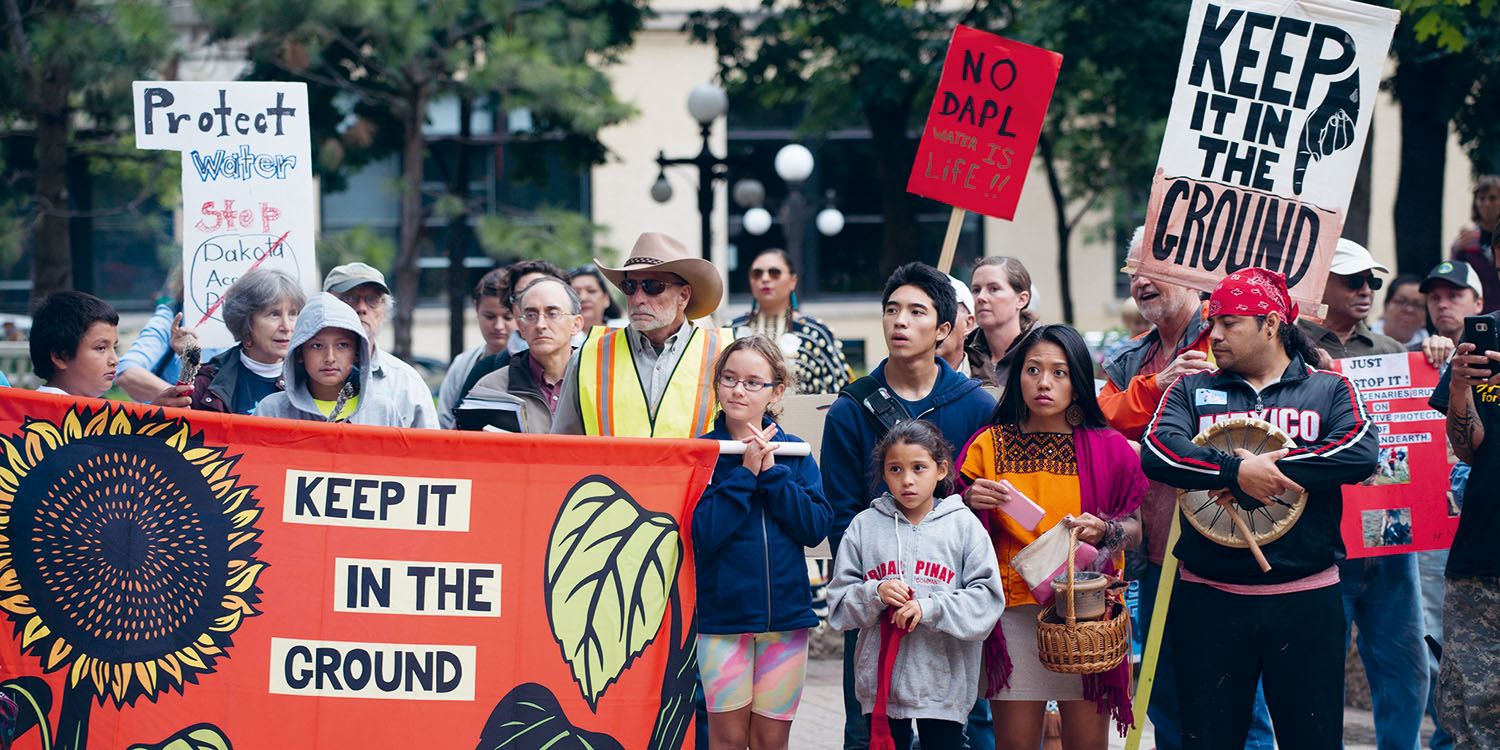
Native Amer­i­cans protest con­struc­tion of the Dako­ta Access Pipeline

Com­mu­ni­cat­ing with our ances­tors places us in the past. We reach back to gain wis­dom or strength to then take with us into our jour­ney ahead. Although the knowl­edge of the future might be less clear, we can also find ways to speak to future gen­er­a­tions. Per­haps the sim­plest place to start is to offer wish­es and place inten­tions to your future self. As we envi­sion the out­lines of a future state of exis­tence, we must also cre­ate more aware­ness of our present con­di­tion and think about how best these present and future selves are con­nect­ed. We can rather eas­i­ly con­struct mes­sages to our future descen­dants. Ask your­self, if you were to talk with one of your great-great-grand­chil­dren, what would be most impor­tant to communicate?

“We change so much that maybe the alien we go in search of is ourselves.”
— Astro­naut Yvonne Cagle15

One of the most fre­quent­ly relat­ed mes­sages between fam­i­ly mem­bers is love for one anoth­er. An extreme­ly uncon­ven­tion­al exam­ple of a rel­a­tive from the dis­tant future shar­ing a mes­sage of love and col­lec­tive uplift, can be wit­nessed in how an Amer­i­can man, named Dar­ryl Anka, chan­nels an extra-ter­res­tri­al being named Bashar. The name Bashar has its roots in Ara­bic, in which it means “bringer of good news, or good tid­ings”. In con­nec­tion with the mean­ing of this name, Bashar deliv­ers mes­sages per­tain­ing to the pos­i­tive syn­chronic­i­ty of a cos­mic civ­i­liza­tion 300 years in our future. These trans­mis­sions elic­it an idea about how today’s human species might play a role in help­ing to make way for a future state of extra-ter­res­tri­al har­mo­nious, sus­tain­able co-exis­tence. While we, as observers of these trans­mis­sions, might dis­agree about the valid­i­ty or details of Bashar’s com­mu­ni­ca­tions, we are more than will­ing to embrace a future-ori­ent­ed mindset.

“With our eyes, we can’t real­ly per­ceive infrared or ultra­vi­o­let light, but we have instru­ments that can do that for us and allow us to peer at some­thing that our sens­es can’t nat­u­ral­ly pick up. Bashar’s peo­ple have the abil­i­ty to do that nat­u­ral­ly. They’ve devel­oped and evolved to the point where they can per­ceive oth­er dimen­sions with their own actu­al sens­es, and that’s one of the rea­sons why he can make con­nec­tions to his past self, which is me, because for them, time and space is not as rigid or fixed as it is at this point for us. But we’re evolv­ing to a point where we’re gain­ing the same kind of flex­i­bil­i­ty that his civ­i­liza­tion already expe­ri­ences.” Dar­ryl Anka

The idea of retro-fore­cast­ing thoughts and ideas from the future back to our present cir­cum­stances, is one applic­a­ble tech­nique for the prac­tice of inno­va­tion. By adopt­ing a future-based per­spec­tive to con­sid­er the present moment, we are able to see our­selves in a new light. Ide­al­ly, we can learn to more effec­tive­ly con­sid­er our cur­rent exis­tence as an inte­gral part of an infi­nite evolution.

Space Colony, Rick Guidice, 1970

Max Grüter
Load more