Categories
Recognize Economic Priorities

Scarcity Is a Fabrication

There is enough time, mon­ey, and pow­er to sus­tain life equi­tably on Earth. The idea that there’s nev­er enough comes from a cyn­i­cal and greedy perspective.

“The ide­ol­o­gy of cap­i­tal­ism is that it is a sys­tem that gen­er­ates immense abun­dance (so much stuff!). But in real­i­ty it is a sys­tem that relies on the con­stant pro­duc­tion of scarci­ty.”— Dr. Jason Hickel

There’s no such thing as a scarci­ty of love, even if it feels in short sup­ply. When fear takes over our emo­tions, how­ev­er, our sense of calm and secu­ri­ty can eas­i­ly feel threatened.

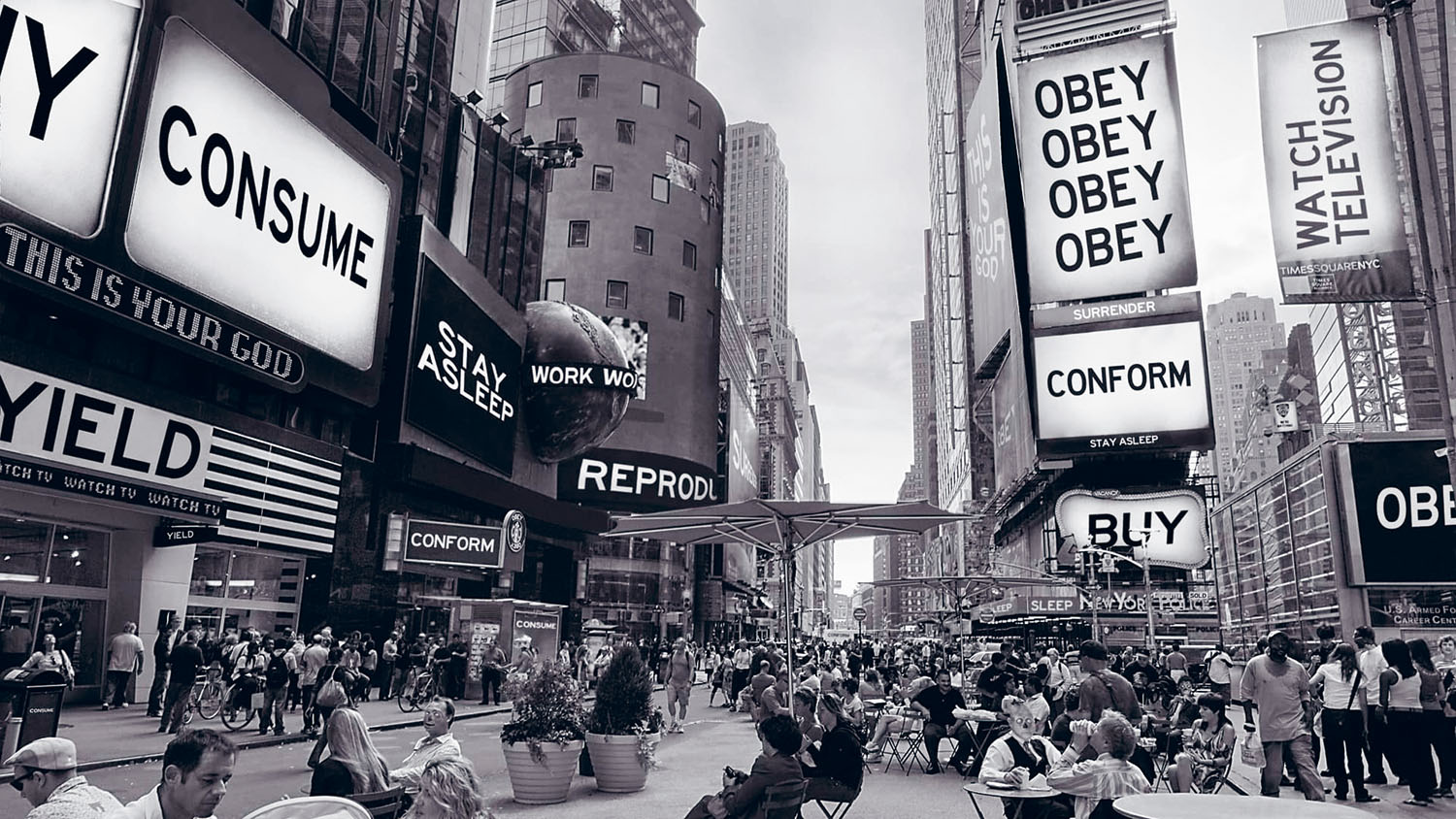
Still from “They Live”, 1988

Scarci­ty of time, mon­ey, or even atten­tion, can feel all too real. There is hard­ly enough time in the day to accom­plish every­thing we want to get done. But we feel it’s impor­tant to ques­tion our sense of how much we feel we’re sup­posed to accom­plish with­in a sin­gle day. After all, so many of our expec­ta­tions are social con­struc­tions, which might defy our own intu­ition. And if we dig a lit­tle deep­er, we begin to real­ize that many of these con­struc­tions have come about because of the promi­nence of exploitive sys­tems and practices.

Much harm is done with­in the rigid con­straints of a cap­i­tal­ist soci­ety valu­ing mate­r­i­al wealth over the var­i­ous sac­ri­fices enabling that wealth. As long as we are being sold goods, our sens­es are bom­bard­ed by heat-seek­ing mis­siles of adver­tis­ing and com­merce aimed at our brain’s deci­sion-mak­ing cen­ter. Buy, vote, choose this and not that, feels like the wrong mes­sage to spend so much effort and resources propagating.

Free-mar­ket cap­i­tal­ism makes a great daz­zling spec­ta­cle out of all the choic­es on offer when, in fact, we’re often being sold the same large, fun­da­men­tal mis­truth: that we don’t have what we need. Scarci­ty, indeed, is cre­at­ed to sup­port the myth that time, ener­gy, and atten­tion should be devot­ed to attain­ing increased amounts of mon­e­tary wealth. By fol­low­ing this pat­tern, Dr. Jason Hickel—an anthro­pol­o­gist, author, and a Fel­low of the Roy­al Soci­ety of Arts—points out that peo­ple eas­i­ly adopt an

“Incwa­di Yami”, British Library, 1887

ide­ol­o­gy of growth as an indi­ca­tor of val­ue rep­re­sent­ed by aspects like more jobs and more goods to make and acquire.41 Growth comes to be seen as an indi­ca­tor of suc­cess. The ide­ol­o­gy of growth is such that we come to believe in this myth of defin­ing suc­cess through the man­i­fes­ta­tion of more stuff.

With­in the ide­ol­o­gy of growth, mech­a­nisms for acqui­si­tion and reten­tion become more impor­tant than mech­a­nisms for estab­lish­ing healthy mod­er­a­tion. Scarci­ty is con­stant­ly employed in the name of cap­i­tal­is­tic expan­sion. This sys­tem has come to more and more pri­va­tize that which ought to be free for all to expe­ri­ence and enjoy.

Recent­ly, how­ev­er, a pos­i­tive move­ment has risen to com­bat this men­tal­i­ty as con­ver­sa­tions around social­ist ini­tia­tives (like uni­ver­sal health care and free access to pre-school and high­er edu­ca­tion) have begun to gain momen­tum from increas­ing num­bers of econ­o­mists and politi­cians. The idea of grant­i­ng uni­ver­sal access to resources to those who typ­i­cal­ly can­not afford them pro­vides an anti­dote to the myth of scarci­ty. Humans ben­e­fit from increas­ing amounts of knowl­edge, wis­dom, and healthy rela­tion­ships. These are the areas in which we want to see growth. Per­haps, in this con­text, the fab­ri­ca­tion of scarci­ty and oth­er dri­vers of mate­ri­al­ism won’t be so promi­nent in our soci­etal rubric in the years to come. And with this con­tex­tu­al change, a rede­f­i­n­i­tion of growth can be estab­lished to sup­port an abun­dance of true wealth in the form of indi­vid­ual and col­lec­tive wellbeing.

Load more