Categories
Depart Enviromental Healing

Healing Begins From Within

From epi­ge­net­ic health kits, to holis­tic heal­ing approach­es that account for the inter­con­nect­ed nature of our anato­my, new forms of advanced heal­ing con­tin­ue to emerge.

Self-heal­ing mech­a­nisms describe ways that bio­log­i­cal bod­ies know how to heal with­out the need of exter­nal inter­ven­tions. Human capac­i­ty for self-heal­ing does not always save us from dis­ease or dan­ger. Med­i­cine plays a huge role in revi­tal­iz­ing a com­pro­mised sys­tem. Yet, con­ven­tion­al med­i­cine rarely includes a holis­tic approach that address­es the entire­ty of a person’s being. And so impor­tant con­nec­tions between cause and effect of pain are often missed. For­tu­nate­ly, con­ven­tions are con­stant­ly chang­ing along with new under­stand­ings of how our bod­ies actu­al­ly work. Oppor­tu­ni­ties for improved stan­dards of care are tak­ing form in due course.

Nations with poor­ly-struc­tured health­care ser­vices suf­fer great­ly from prob­lems of mis­placed pri­or­i­ties. In the U.S., the health­care sys­tem is designed to make prof­its for the insur­ers by mak­ing cov­er­age more cost­ly for those in great­est need. The clear answer to this issue is to enact uni­ver­sal health­care. Along the pur­suit of sweep­ing struc­tur­al changes in which every­one has access to appro­pri­ate care, we believe in hav­ing a pub­lic con­ver­sa­tion around how lifestyle and med­i­cine can be seen as dif­fer­ent com­po­nents of the same heal­ing process.

Epi­ge­net­ics is the study of her­i­ta­ble changes in gene expres­sion. If genet­ics is the hard­ware, then epi­ge­net­ics is the soft­ware. Spe­cif­ic genes in the body are turned on or off by a whole range of envi­ron­men­tal lifestyle fac­tors includ­ing: diet, one’s psy­cho­log­i­cal state, exer­cise, finan­cial con­di­tions, and so forth. Epi­ge­net­ic inher­i­tance posits that pat­terns of gene expres­sion can be passed from par­ents to chil­dren, from child to grand­child and even fur­ther. Genes are not sep­a­rat­ed from indi­vid­ual instances of sub­jec­tive experience—they respond to the envi­ron­ment around them, which includes all incom­ing infor­ma­tion. Envi­ron­men­tal fac­tors inter­act with a person’s genome to effect epi­ge­net­ic change. By focus­ing on the envi­ron­ment as the root cause for gen­er­at­ing desir­able con­di­tions for health, epi­ge­net­ics has the poten­tial to advance more pro­gres­sive, lib­er­al, and inclu­sive social policy.

“Know­ing the way to tomor­row”, Aida Muluneh, 2018

“We can now say emphat­i­cal­ly, that the func­tion of our entire metab­o­lism is depen­dent on light.” — Dr. Fritz Albert Popp

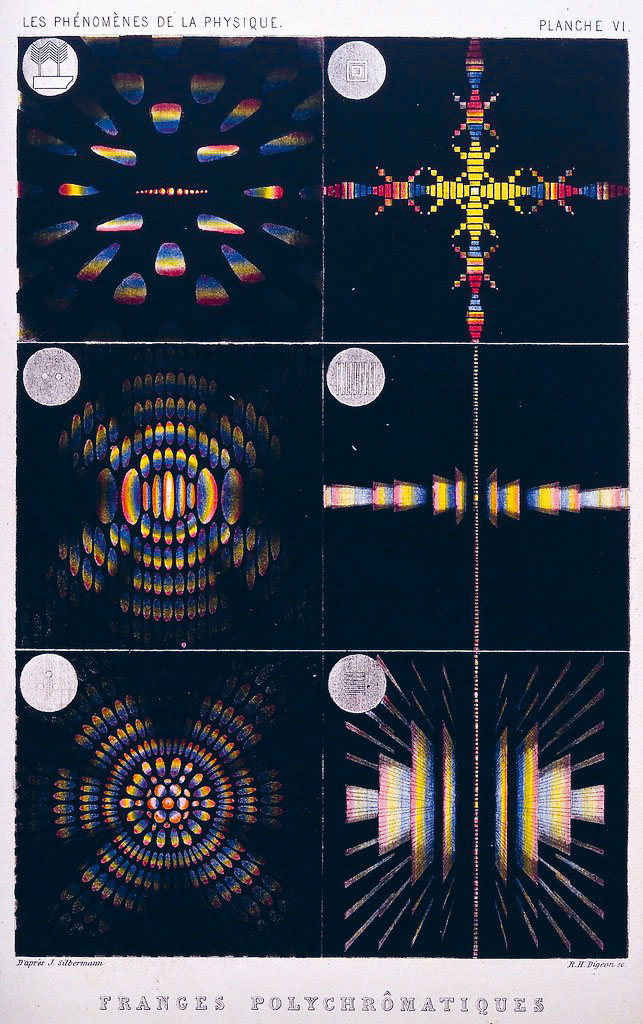
Crys­tals exhibit­ing inter­fer­ence colours, R.H Digeon, ca. 1883

From anoth­er per­spec­tive, sci­en­tif­ic inquiry into bio­pho­tons —which are light par­ti­cles in the ultra­vi­o­let range gen­er­at­ed by bio­log­i­cal sys­tems like our bodies—offers a glimpse of ­human­i­ty as a phe­nom­e­non of light. Ger­man bio­physi­cist, Dr. Fritz-­Al­bert Popp, has been con­duct­ing research into this branch of quan­tum biol­o­gy for decades. In 1984, Popp co-pub­lished a study describ­ing the phe­nom­e­non of ultra­weak pho­ton emis­sion from liv­ing sys­tems.34 In 1988, anoth­er co-pub­li­ca­tion by Popp took his research fur­ther, claim­ing that bio­pho­tons are con­sis­tent­ly stored and emit­ted through bio­log­i­cal sys­tems, and might be foun­da­tion­al in reg­u­lat­ing an organism’s bio­log­i­cal process­es.35 The resound­ing impli­ca­tions of Popp’s research on “bio­pho­ton­ic emis­sions” might pro­vide cru­cial insights into help­ing pre­vent ill­ness­es and accel­er­at­ing recov­ery by learn­ing to lever­age these emis­sions. In one remark­able study, Pro­fes­sor Popp found that when look­ing at two mol­e­cules, one can­cer­ous and one safe for humans, the can­cer­ous mol­e­cule did not allow light to pass through unal­tered as it did in the “safe” mol­e­cule. Instead, the can­cer­ous mol­e­cule re-emit­ted a scram­bled form of the light that it encoun­tered at a dif­fer­ent fre­quen­cy. This dis­cov­ery implies that if we can gen­er­ate a deep­er under­stand­ing of how cer­tain com­pounds process light, then we will have a much bet­ter base­line under­stand­ing of which mate­ri­als are safe, and which might be harm­ful, for human inter­ac­tion. Anoth­er poten­tial­ly broad­er impli­ca­tion of bio­pho­ton­ics might be that neu­rons in the brain pro­duce pho­tons that are capa­ble of form­ing the infra­struc­ture for cel­lu­lar, light-based com­mu­ni­ca­tion. This research leads to excit­ing pos­si­bil­i­ties, like the idea of such light-based com­mu­ni­ca­tion hap­pen­ing between indi­vid­u­als in the future (much like how fiber optics quick­ly trans­mit infor­ma­tion today).36

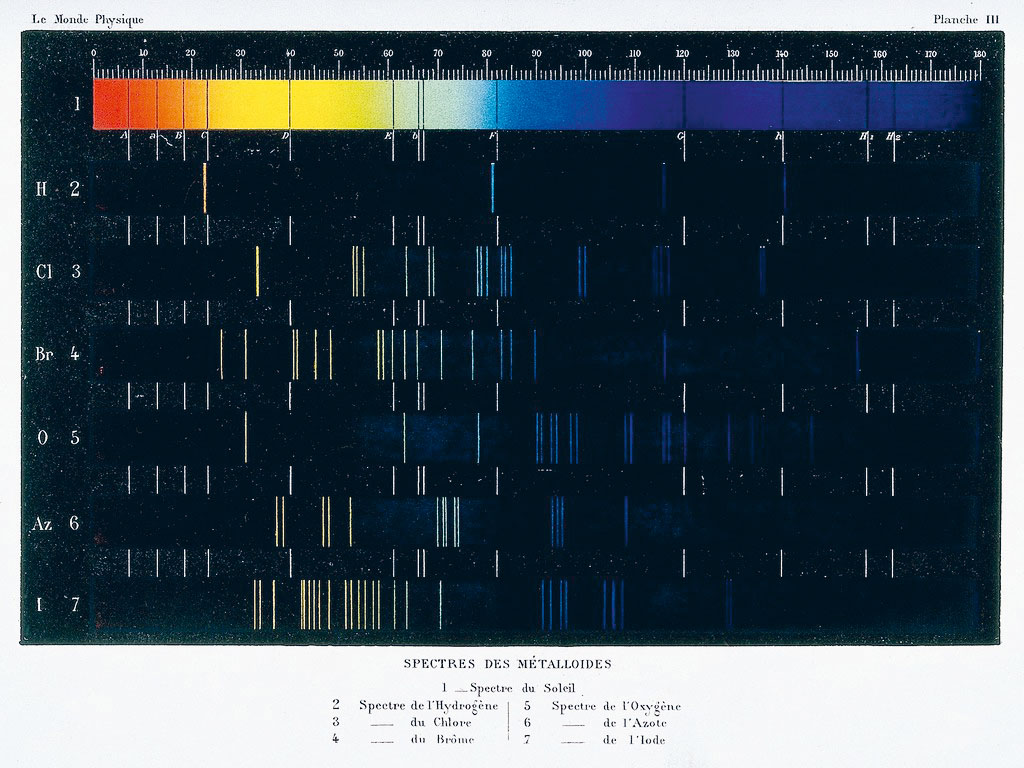
Spec­tra of var­i­ous gas­es, R.H Digeon, ca. 1883

How we com­mu­ni­cate and inter­act with one anoth­er depends great­ly on our emo­tion­al states. The ways in which our emo­tions affect our health cor­re­spond to the var­ied fre­quen­cies expe­ri­enced as deeply as with­in our indi­vid­ual DNA. Human DNA vibrates at a fre­quen­cy rang­ing from 52 to 78GHz, vary­ing accord­ing to our emo­tion­al state.37 In rela­tion to our DNA, our bod­ies change fre­quen­cies accord­ing to our states of health. The human brain and our bod­i­ly systems—including our hor­mones, ner­vous sys­tem, and immune system—work close­ly togeth­er to process and reg­u­late emo­tions. The fre­quen­cy of our DNA reflects this recipe of var­ied qualia, or sen­so­r­i­al units of expe­ri­ence, work­ing in con­cert with many envi­ron­men­tal fac­tors to com­prise our indi­vid­ual real­i­ties. By mak­ing con­scious effort to cre­ate envi­ron­ments that are peace­ful and nour­ish one’s inner state, we can become more adept at reg­u­lat­ing the fre­quen­cies of our DNA toward pos­i­tive effect.

Healthy rela­tion­ships cre­ate pos­i­tive con­di­tions in which to learn, grow, and flour­ish. Stress pos­es a seri­ous threat to these pos­i­tive con­di­tions, and inter­feres with one’s abil­i­ty to be healthy in body and mind. A child’s expe­ri­ence with stress can begin as ear­ly as in the womb. Through pre­na­tal expo­sure to the mother’s stress, which becomes inter­nal­ized in utero, this stress is intro­duced and can then become rein­forced through­out one’s lifes­pan.38 The Hun­gar­i­an-born Cana­di­an physi­cian Gabor Maté has worked to reveal the link between emo­tion­al stress and phys­i­cal ill­ness, includ­ing can­cer, autoim­mune con­di­tions, and oth­er chron­ic dis­eases, by study­ing the links between the body’s var­i­ous sys­tems and their con­nec­tion to result­ing emo­tion­al states. Maté’s work takes a holis­tic look at how stress and trau­ma expe­ri­enced ear­ly on in one’s devel­op­ment car­ries poten­tial life­long impact. As Dr. Maté explains, our brains are espe­cial­ly influ­enced by our psy­cho­log­i­cal envi­ron­ments, which are a reflec­tion of soci­ety at large.39 To effec­tive­ly deal with the wide­spread cul­ture of stress that affects so many peo­ple in mod­ern civ­i­liza­tion, it’s vital that we look for ways to con­nect with one anoth­er and sup­port our indi­vid­ual, and col­lec­tive, social and emo­tion­al growth. For con­di­tions with­in soci­ety, with­in fam­i­lies, and with­in indi­vid­u­als to improve, it’s imper­a­tive we work to heal and nour­ish the inner child with­in us all.

“The essence of trau­ma is dis­con­nec­tion from our­selves. Trau­ma is not ter­ri­ble things that hap­pen from the oth­er side—those are trau­mat­ic. But the trau­ma is that very sep­a­ra­tion from the body and emo­tions. So, the real ques­tion is, “How did we get sep­a­rat­ed and how do we recon­nect?” — Dr. Gabore Maté

The term “mind-body monism” refers to the one­ness of phys­i­cal and men­tal states. Since the 1980s, there’s been mount­ing evi­dence from researchers in the med­ical com­mu­ni­ty to show that sup­port­ive tech­niques like group ther­a­py and Cog­ni­tive-Behav­ioral Ther­a­py have a sig­nif­i­cant impact on heal­ing and dis­ease pre­ven­tion. Har­vard, Colum­bia Uni­ver­si­ty, and UCLA are among a grow­ing num­ber of insti­tu­tions that have cre­at­ed depart­ments to study mind-body treat­ments. The idea that heal­ing hap­pens through all lay­ers of human exis­tence con­tin­ues to gain greater accep­tance.40 Today, we know that how we feel influ­ences how we think and vice ver­sa. This knowl­edge pro­found­ly impacts our health. Along with nutri­tion, exer­cise, and sleep, emo­tions also play a major role in over­all health. Stress has been found to be a pri­ma­ry cause for “dis-ease”. When the parasym­pa­thet­ic ner­vous sys­tem is active and the indi­vid­ual is in a relaxed state, the body has an innate abil­i­ty to self-repair.

Poster for a Human Be-in, 1967

The notion of Quan­tum Heal­ing is based on the mind-body con­nec­tion. From the premise that all cells are con­scious, Quan­tum Heal­ing pro­pos­es the abil­i­ty of humans to con­duct con­scious repair of their own bod­ies at a cel­lu­lar, or sub­atom­ic, lev­el. This bur­geon­ing form of heal­ing may come to com­bine with tra­di­tion­al and alter­na­tive meth­ods of cura­tive, pre­ven­tive, and inte­gra­tive med­i­cine to arrive at a promis­ing future for the health of all individuals.

The more that inter­dis­ci­pli­nary approach­es are devel­oped to look at heal­ing from a holis­tic per­spec­tive, the more that indi­vid­u­als and com­mu­ni­ties will expe­ri­ence the ben­e­fits of healthy liv­ing. Wher­ev­er heal­ing is required, we must pri­or­i­tize sup­port­ive envi­ron­men­tal and inter­per­son­al con­di­tions. A sup­port­ive com­mu­ni­ty is a cen­tral pil­lar to uphold a healthy cul­ture. When encour­ag­ing con­di­tions are estab­lished, then we are able to gal­va­nize our inter­nal pow­ers of body and mind toward revitalization.

Load more